
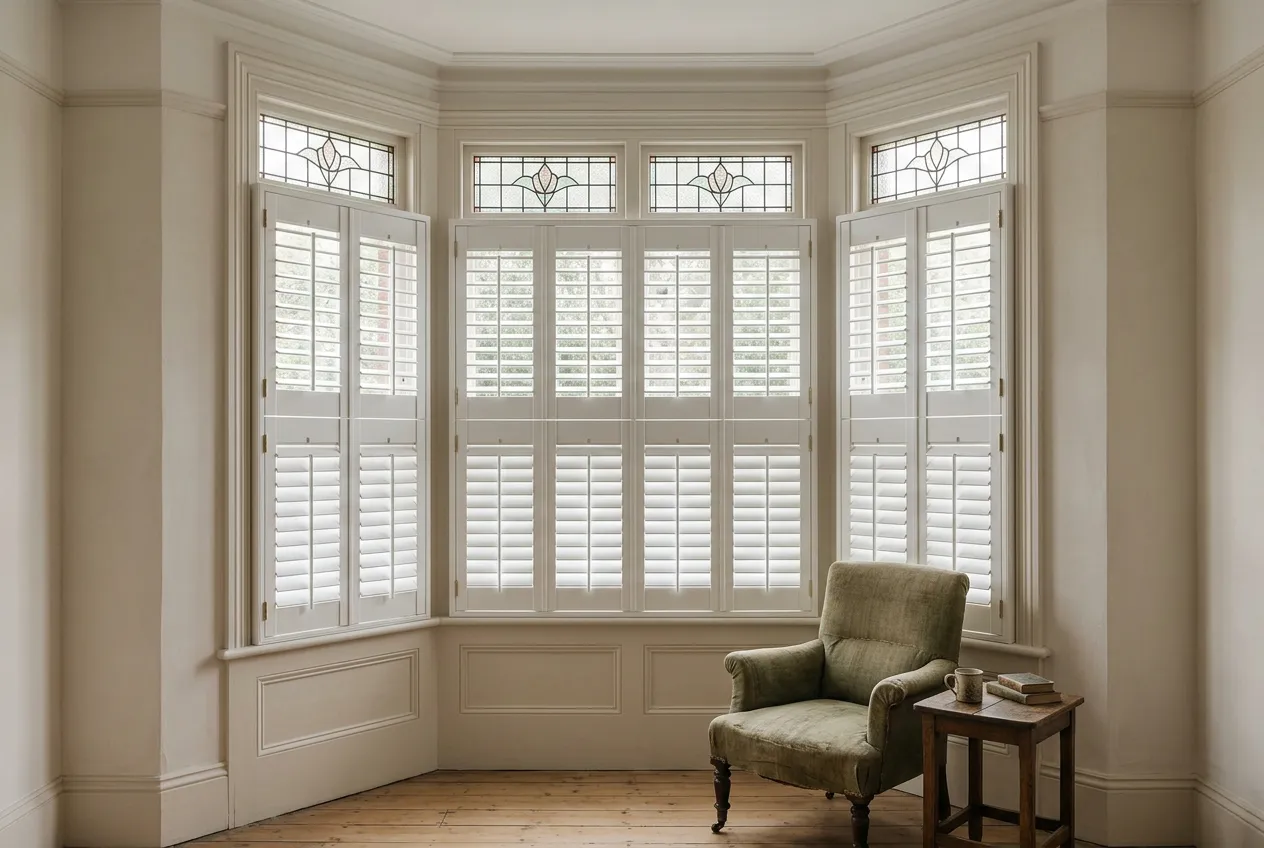
A good shutter layout works with an older window and keeps its distinctive details visible. Before choosing a colour or louvre size, look at the glazing bars, architraves, bay angles and how the window opens. These determine where frames and horizontal rails should sit.
Start with the original window
Check its condition and operation first. A shutter should not conceal a repair problem, obstruct ventilation or make a sash difficult to use. If original shutter boxes or surviving shutters are present, consider their significance before introducing a new system.
Historic England’s guidance on traditional windows explains why sensitive repair and improvement matter. Where a building is listed, or work could affect historic features, speak to the local conservation officer before alterations.
Match the layout to the room
- Full-height: full-window coverage with adjustable louvres. Consider a divider rail or split-louvre arrangement for lower-window privacy.
- Tier-on-tier: upper and lower panels open independently. Check the split against the sash meeting rail.
- Café: lower-window coverage leaves upper glass exposed. Consider the evening view into the room as well as daytime privacy.
- Solid: closed panels block the view and daylight. Plan how they will open and where they will sit.
Our guide helps you compare full-height and tier-on-tier shutters without confusing separate louvre control with separate panel opening.
Victorian and Edwardian design decisions
For tall sashes, narrower bays and elaborate architraves, read our Victorian guide. If a wider bay has stained-glass fanlights, the Edwardian guide considers keeping those upper details visible.
These are starting points, not rules based on the house’s age. Later alterations, replacement windows and furniture can matter more than the period label.
Compare a finish beside the existing paintwork
View physical samples against trim and walls in daylight and under evening lighting. Bright white, warm white and cream can look different beside older joinery. Ask which materials and colours are available for the layout and room conditions.
Comfort without unrealistic promises
Closed shutters can help limit heat loss through covered glass, but results for traditional solid shutters do not establish guaranteed savings for modern louvred products. They do not replace draught repairs or ventilation. For practical expectations, read our shutter insulation guide.
Your survey checklist
- Window condition and original shutter fittings.
- Handles, sash travel, vents and cleaning access.
- Bay angles, recess depth and out-of-square openings.
- Clearance around furniture, radiators and trim.
- Fixing positions and conservation requirements.
Keep photographs of original features and ask for the intended panel arrangement to be explained before approving an order.
Talk through your windows with Ash
Book a free shutter consultation, or call 01277 592419. Send your postcode, the rooms you are considering and a few window photographs. Rough sizes help the initial conversation; final measurements need a survey before ordering.

